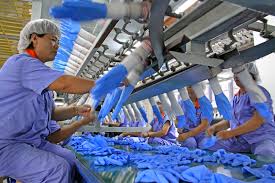
MAKATI – Amidst a backdrop of the surging COVID-19 pandemic, Philippine merchandise exports grew by 2.8% in February 2020 to USD5.4B from USD5.3B in the same period last year, based on the preliminary Philippine Statistics Authority (PSA) data. Semiconductors were still the top export product, comprising 75.7% of electronics exports and 41.7% of all merchandise exports.
This was the second consecutive month of positive growth, after the 9.7% growth in January 2020. Cumulatively, merchandise exports grew by 6.1% in the first two months of 2020 to USD11.2B from USD10.5B in the same period a year ago.
The Department of Trade and Industry-Export Marketing Bureau (DTI-EMB) pointed out that for February, six of the top 10 export products recorded positive growth. These were other manufactured goods (45.0%); fresh bananas (29.6%); other mineral products (13.2%); machinery and transport equipment (11.7%); gold (6.0%); and electronic products (3.4%). Majority of export products were still electronic products at 55.1% while non-electronics made up the remaining 44.9%
After posting a 15.8% increase in January, electronics exports grew again in February, albeit at a slower pace, by 9.7%. This was a lot better than the negative 0.5% growth recorded in the same period last year. Meanwhile, exports of non-electronic products rose from a 24-month decline with a 2.0% growth to USD5.0B year-to-date (YTD) from USD4.9B in the same period last year.
In terms of markets, exports grew in seven out of the top 10 markets of the Philippines. Exports to Malaysia grew the biggest at 28.5% YTD to USD340M. This was followed by South Korea with an 18.9% growth to USD490M and Thailand with a 15.3% growth to USD500M.
Exports in the top three markets, namely China, including Hong Kong; Japan; and the US also grew in February, albeit more modestly. These countries made up 57.3% of all Philippine merchandise exports in the review period.
The Philippines was also in the five countries among 11 Asian trade-oriented economies with positive YTD growth. The country ranked 3rd in YTD and 9th in year-on-year (YOY) exports.
However, the stellar performer was Vietnam, which posted a 50% YOY export growth, according to Bloomberg, it can be attributed to shipments of new Samsung S20 phones.
On the other hand, Chinese exports declined the most at 17.3% in February, while it is battling with the COVID-19 pandemic.
In another development, the DTI-EMB is conducting an online survey to PH exporters on the "Impact of COVID on Your Export Business". The survey seeks to learn and understand the impact of COVID-19 on the exporters' businesses, with the results to be used as basis for a data-driven recovery plan to be crafted by DTI-EMB for the Philippine export sector.
The Department of Trade and Industry (DTI) and the Department of Finance (DOF) push for greater support in the manufacture and importation of essential products during the Enhanced Community Quarantine (ECQ) by granting incentives through the Joint Memorandum Circular (JMC) No. 20-02, series of 2020 issued on 1 April 2020.
Under Republic Act No. 11469, otherwise known as “Bayanihan to Heal as One Act,” DTI and DOF are authorized to liberalize the grant of incentives for the manufacture and importation of critical equipment or supplies.
In order to achieve this, the two agencies shall ensure the availability of essential goods and require businesses to prioritize contracts, subject to fair and reasonable terms, for materials and services needed by the government in its campaign against the COVID-19 pandemic.
The importation of these goods shall be exempt from import duties, taxes, and other fees.
“We need to ensure that the disruptions in the supply chain are minimized, as well as give enterprises a reprieve from commonly imposed taxes,” said Trade Secretary Ramon Lopez.
“We will help our manufacturers, especially those partnering with medical institutions and hospitals, procure or produce these essential goods at reduced costs by providing them with tax breaks during this global health crisis,” said Finance Secretary Carlos Dominguez III.
Sec. Dominguez added, “This is the least the Duterte administration could do to help our healthcare front-liners win the battle against COVID-19 by ensuring their access to personal protective equipment (PPEs) and other necessities to protect themselves and to medicines and medical supplies to treat their patients."
The Trade Secretary also mentioned that this was the government's way of showing gratitude for the cooperation of enterprises despite the restricted movement and conditions imposed during the quarantine period.
The JMC covers the production and manufacture of medicines identified critical by the Department of Health (DOH), medical equipment and devices, personal protective equipment, surgical equipment and supplies, as well as laboratory equipment and its reagents.
It also applies to the support and maintenance for the following: bit.ly/DTIDOFJMC2002
The JMC likewise covers raw materials and packaging materials exclusively used for the production of the above-mentioned products.
Among the provisions of the RA 11469 is for the government to collaborate with the private sector and other stakeholders to deliver these measures and programs quickly and efficiently.
Sec. Dominguez assured that the Bureau of Customs (BOC) will be able to assist in the timely release of the imports of raw materials, packaging, and articles required in the supply chain of production.
“We urge our partners in the private sector for their continued understanding on the importance of the unimpeded production and importation of these essential products," said Sec. Lopez.
Meanwhile, Sec. Dominguez said, "We thank these manufacturers, institutions, and hospitals that continue to innovate and produce essential goods to help save Filipino lives in the face of the pandemic."
With the continued cooperation of the private sector and other involved agencies, DTI and DOF remain optimistic in minimizing the spread of the virus and its long-term impact on the local economy.
The JMC shall remain in effect only during the effectivity of RA 11469.
MANILA – The Department of Trade and Industry (DTI) released Memorandum Circular (MC) No. 20-12, Series of 2020 on 4 April 2020 granting a 30-day grace period for residential rent as well as a similar grace period for Micro, Small, and Medium Enterprises (MSMEs) with their commercial rent during the Enhanced Community Quarantine (ECQ) period in Luzon.
“To provide economic relief to Filipinos and MSMEs during the COVID-19 public health emergency, DTI is implementing these guidelines to ensure their survival during the ECQ, as well as to help brace them afterwards,” said Trade Secretary Ramon Lopez.
Following Republic Act (RA) No. 11469, or the “Bayanihan to Heal as One Act,” DTI will enforce a 30-day grace period for commercial rents that fall within the duration of ECQ to give respite to MSMEs that have temporarily ceased operations. These enterprises will also not incur interest, penalties, fees, and other charges under the grace period. Similarly, DTI will ensure that a minimum of 30 days grace period shall be granted for residential rent that fall due within the ECQ under the same terms.
Under the MC, the grace period will be determined as 30 calendar days following the last due date of the rent during the ECQ. Cumulative amount of rents that need to be paid within the ECQ must be amortized equally in the six months following the end of the said period. This can be added to the rent owed for succeeding months without interest, penalties, fees, and charges.
On the other hand, lessors are not obligated to refund residential and commercial rents already paid by lessees during the ECQ. However, lessors must grant a minimum of a 30-day grace period from the next due date of residential and commercial rents without interests and other penalties as well.
Likewise, the MC calls on lessors of MSMEs to extend their generosity, if possible, the following: total or partial waiving of commercial rents due during the ECQ; granting a reprieve or discounted amount of commercial rents due after the ECQ; opening renegotiation of the Lease Term Agreements with lessees; and using other ways to mitigate the impact of the ECQ for MSMEs.
More importantly, the trade chief emphasized that there should be no eviction for failure to pay residential or commercial rent due within a 30-day period after the lifting of the ECQ.
“No Filipinos should lose their residence during the ECQ period. Moreover, the importance of MSMEs in jumpstarting our economy once the ECQ has been lifted cannot be understated,” Sec Lopez said.
“Through these measures, we ensure that our fellow Filipinos have a future after the ECQ with homes that they can live in and through jobs and employment provided by our MSMEs,” Sec. Lopez added.
Complaints of violations of the MC can be brought to DTI in person or electronically by emailing the agency, either through the Fair Trade and Enforcement Bureau (FTEB) through FTEB@dti.gov.ph or with the regional offices. Lessors who violate these guidelines will need to answer the Notices of Violations (NOVs) issued by DTI.
As provided under RA 11469, lessors that are found guilty of refusing to provide the 30-day grace period to lessees shall be penalized with imprisonment of not less than two months or a fine of not less than Php 10,000, or both.
3 April 2020 – The APEC Business Advisory Council (ABAC) has called for APEC leadership and cooperation to fight the challenges to health and economies posed by the COVID-19 pandemic.
“Saving lives is obviously what matters most right now,” said ABAC Chair Dato Rohana Tan Sri Mahmood. “That demands collaboration across the region on the knowledge and the tools we need to combat the health impacts and mitigate the most severe consequences in the short term, she added.
The Council has written to APEC Trade and Foreign Ministers to ensure free flow of essential goods and tools critical to address the health emergency, including medical equipment, medicines and basic items such as disinfectants and personal protective equipment. Specifically, economies should facilitate trade by simplifying and expediting border procedures, and relaxing the rules for ease of movement of essential workers and medical professionals across borders where they are most needed.
Dato Rohana however, stressed the need to lay the groundwork for rapid economic recovery when the worst of the impact of COVID-19 begins to wane. “This is rapidly becoming a financial and economic crisis too,” she added. “The impact on workers, businesses and supply chains are already severe. We are especially concerned about small business, the self-employed and those in the informal economy, who are ill-equipped to withstand these impacts,” said the ABAC Chair.
ABAC also called on APEC economies to make the fullest possible use of digital technologies and connectivity, and work together effectively across economies and enable a level of economic activity to continue. “There is no precedent for the global shutdown we are now experiencing and no guidebook to assist us as we recover,” said Dato Rohana, “so it is critical that APEC economies work collaboratively to address the immediate challenges and to plan for reopening of our borders as soon as possible.”
Meanwhile, the Philippines expeditiously passed the “Bayanihan to Heal as One Act,” laying the government’s policy and emergency measures to address the COVID-19 situation in the Philippines. This include allocating budget and resources to facilitate testing by public and private health institutions, directing establishments to serve as quarantine areas, relief distribution centers, and providing expanded subsidies to low-income households.
ABAC Philippines welcomes the collective response from the government and other stakeholders in addressing the COVID-19 situation in the country. Member Guillermo Luz notes how the private sector responds and complements the current COVID-19 measures. Companies have adopted work-from-home and other flexible work arrangements, and provided financial and relief assistance to their workers. Utility companies and banking institutions have offered reprieve from late payments while ensuring continued services to their clients. Malls have likewise given rental holiday for their tenants during the mandatory closure period.
“While COVID-19 has critically disrupted business operations across the country, this situation has shown that Philippine businesses are ready to step up and find ways to mitigate the impact especially for entrepreneurs and ordinary workers,” Mr. Luz said. He cited the joint initiative of the private-sector led Philippine Disaster Resilience Foundation (PDRF) and religious organization Caritas Manila called Project Ugnayan, which provides unconditional emergency cash transfers to the poorest of the poor in Greater Metro Manila area. According to Mr. Luz who is also PDRF’s chief resilience officer, “In times of crisis, Filipinos always rise to the occasion to help fellow Filipinos (and non-Filipinos) in need.” Ugnayan aims to feed 1 to 1.5 million families with P1,000 per family in the form of gift certificates or grocery vouchers which are redeemable in supermarkets.
For ABAC Philippines Chair Tomas Alcantara, “It is important to have an efficient and concerted strategy by the public and private sector to address urgent health emergencies, on the one hand, and immediate and longer-term social and economic recovery, on the other.” “Our preparations for the worst includes being able to quickly bounce back from the COVID-19 situation, so we can nurture a healthy Filipino population and rebuild a competitive Philippines again,” he added.
The Department of Trade and Industry (DTI), in coordination with the Philippine Ports Authority (PPA), the Bureau of Customs (BOC), the Department of Finance (DOF), and the Department of Agriculture (DA), among others, agreed to create a policy that will decongest the ports of Manila and help bring food, medicine, and Personal Protective Equipment (PPE) into the country during the COVID-19 quarantine.
The Inter-Agency Task Force (IATF) for the Management of Emerging Infectious Diseases had earlier ordered the PPA to clear the ports of overstaying containers in order to make way for incoming cargoes needed by the government in its campaign against the coronavirus.
"We have discussed this in previous IATF meetings and will soon issue a resolution on this. We are currently finalizing a Joint Administrative Order with PPA, BOC, DOF, DA, and other involved agencies to expedite the withdrawal of overstaying containers,” said Trade Secretary Ramon Lopez.
In the proposed JAO, all overstaying cargoes that remain beyond thirty (30) days from discharge are required to be withdrawn within five (5) days from the effectivity date of the administrative order. Otherwise, cargoes will be considered abandoned.
Priority processing shall also be given to arriving cargoes, particularly food, medicine, medical and basic necessities. Containers scheduled to arrive after the issuance of the JAO must be withdrawn within ten (10) days from discharge. Otherwise, they shall also be declared abandoned.
Furthermore, appropriate penalties shall be imposed by the PPA to ensure that consignees and importers withdraw the cargo within the window provided. All refrigerated containers must be pulled out within seven (7) days, except chilled cargoes which are given five (5) days from the issuance of the JAO. Unclaimed reefers are granted a three-day grace period, and after which are declared as abandoned goods.
Upon publication, the JAO shall remain in effect until the state of public health emergency is lifted, subject to changes as may be instructed by the Office of the President.
“This is very important because port congestion creates disruptions in our supply chain. It will hinder the flow of goods and cause delays in the delivery of cargo, which will then affect the prices of goods in the market. It creates a domino effect,” Sec. Lopez explained.
“We also need to free up space in our container yards to accommodate the arrival of cargoes containing food items, medicines, and protective equipment for our front liners,” he added.
PPA General Manager Jay Daniel Santiago earlier warned of a possible shutdown of the Port of Manila if cargo owners and consignees ignored calls to withdraw cleared, ready-for-delivery, and overstaying cargoes.
“We have repeatedly reminded consignees and importers to pullout their cargoes to lessen the congestion in our ports,” said Sec. Lopez.
At present, the yard utilization at the Manila international ports, composed of the Manila International Container Terminal (MICT) and the Manila South Harbor, are almost at maximum capacity due to the idle movement of cleared cargoes containing perishables such as food, medicines, and other essentials following the declaration of the Luzon-wide Enhanced Community Quarantine.
The PPA has temporarily authorized the immediate and accelerated transfer of all overstaying foreign containers cleared for delivery or withdrawal to maintain the efficiency and productivity of the MICT.
As the number of COVID-19 cases increases in the country, there is also an increasingly growing concern about the lack of personal protective equipment for our frontline workers. Thus, the Department of Trade and Industry – Regional Operations Group (DTI-ROG), spearheaded by Undersecretary Blesila Lantayona, in collaboration with the Labspace for Innovation Knowledge-Honing and Application (LIKHA) FabLab of the Batangas State University (BatStateU), is producing face shields using 3D printed face bands and acetate films for health workers who are in the frontline against the dreaded pandemic virus.
“DTI is not only committed to ensure efficient delivery of business development services and to enforce consumer protection and education in the countryside, but also, is more devoted to be of help during this pandemic crisis. Kaya naman naisip namin na gamitin ang ilang mga ipinamahaging Shared Service Facilities (SSF) equipment sa bansa, katuwang ang mga MSMEs at ilang state universities and colleges, upang lumikha ng mas maraming face masks at face shields para sa ating mga kababayan, lalong na sa mga bayani natin ngayon na humaharap sa mapeligrosong epidemya,” said Usec. Lantayona.
The LIKHA FabLab is a Shared Service Facility funded by the DTI, where business enterprises engaged in top industries in the CALABARZON region, such as furniture-related processes and electronics, can converge with designers to create and develop models and make prototypes for mass production. It is a digital fabrication that enables collaboration and promotes transparency among designers and modellers aided by computer-controlled machines. Stored digital design using the sophisticated technology provides an array of services to make the whole furniture design. Moreover, the manufacturing team takes care of the detailed designs, analysis, documentation, and fabrication.
“The supply of additional protective face shields is our way of solving the problem in the lack of PPE for our frontliners,” said LIKHA FabLab Center Head Engr. Louie Villaverde.
According to Engr. Villaverde, they already donated 130 face shields to Batangas Medical Center. They are also planning to provide more by producing 30-40 face shields a day to different hospitals in Batangas, then later to to the hospitals in the entire CALABARZON and soon, to other frontline workers nationwide.
Engr. Villaverde noted that for now, they are in need of additional materials. Any donations or supplies of raw materials will be of great help. “We are in the position to help others. Kahit maliit o malaki, ito ay tulong pa rin,” said Engr. Villaverde.
The Center for Technopreneurship and Innovation of the Batangas State University is accepting raw materials for fabrication of face shields:
- Acetate or PVC Sheets, Size A4
- Rubber Bands (natura)
- 3D Printer Filament (PLA-type fro Ultimaker)
- ABS Sheet and Acetate for Vacuum Forming Machine
Here are some suppliers that you can contact directly as it will be difficult for the FabLab to accept monetary donations:
- Puzzlebox (3D Printer Supplier, Mr. Clark Merano, 09663383175
- ES Print Media, Inc. (ABS and Acetate), Mr. Ron Mariano, 09177129190
Donations may be sent to Batangas State University, Pablo Borbon Main II, Alangilan, Batangas City.
“We are strongly supporting the effort and initiative of LIKHA in developing innovative and effective solutions to help in combatting COVID-19. As we, in the DTI, work alongside with LIKHA, we are urging everyone, especially in the CALABARZON, to support their very important work,” DTI 4-A Director Marilou Toledo said.
Benguet MSMEs produce facemasks for COVID-19! The municipality of Itogon, Benguet, through the initiative of LARNS Hills Association of Ampucao tailors, has already placed a bulk order of washable facemasks for the local community. LARNS is a recipient of the DTI's Shared Service Facility program.
Considered as the backbone of the country’s economy, micro, small, and medium enterprises (MSMEs) are well distributed in every place that you find them in food manufacturing, retailing, and distribution among others. In the Cordillera provinces, MSMEs are trying to cope up with the downturn of business resulting from the imposed enhanced community quarantine as a measure of protection and overcoming adversities brought by the coronavirus disease or COVID-19 pandemic. Responding to the needs of the people and inadequacy of suppliers, MSMEs took initiative in producing face masks and face shields for the community, frontliners and health workers.
In Kalinga, more than 3,000 pieces of facemasks are produced in a week while entrepreneurs from other provinces are also sewing masks to augment shortage in the area. Kalinga’s Carol Lines Ethnic Fashion, Balik-Tribo Fashion Accessories, Kinwa Etnika Handicrafts, Jajie's Native Fashion & Ifka's Weaving and other members of the Chamber of Kalinga Producers Inc. are also donating their resources, time and effort to frontliners doing extra work to contain the spread of the dreaded COVID-19.
In Mountain Province, members of the Montañosa Weavers Association (MWA), a provincial wide weaver’s organization, Guinzadan Weavers and recipient of sewing machines and looms under DTI’s Shared Service Facility (SSF) program wanted to give back to the community by donating facemasks to Sagada local government. Other SSF Cooperators, such as Guinzadan Weavers Association and Tribeline Cordi, are making washable facemasks available at affordable prices.
For Benguet province, DTI-initiated rolling stores for prime and basic commodities were scheduled in Tuba in coordination with the local government unit reaching Nangalisan in March 24, Camp-4 in March 25, Twin Peaks in March 26 and Taloy in March 27. Items sold in the four-rolling-store activity were provided by Tiong San La Trinidad through the coordination of DTI Baguio-Benguet.
Criminal charges would be filed against those suspected of overpricing and hoarding medical devices and products like alcohol, medicines, and face masks.
DTI-CAR has already coordinated with the Criminal Investigation and Detection Group (CIDG) of the Philippine National Police (PNP) to look into the reported scams and online selling of said medical devices at high prices.
All LGUs activated their Local Price Coordinating Councils as a mechanism to prevent and curb the possibility of price manipulation. As a council, they conduct joint monitoring to cover all basic necessities and prime commodities and other critical products, regardless of agency jurisdiction provided in the Price Act.
The country’s Price Act also maintains that the State provides effective and sufficient protection to consumers against hoarding, profiteering and cartels with respect to the supply, distribution, marketing and pricing of said goods, especially during periods of calamity, emergency, widespread illegal price manipulation and other similar situations.
As defined under Section 3 of the Price Act, “Basic Necessities” include: rice; corn; bread; fresh dried and canned fish and other marine products; fresh pork, beef, and poultry meat; fresh eggs; fresh and processed milk; fresh vegetables; root crops; coffee; sugar; cooking oil; salt; laundry soap; detergents; firewood; charcoal; candles; and drugs classified as essential by the Department of Health.
QUEZON CITY – Department of Trade and Industry (DTI) Secretary Ramon Lopez and Department of Agriculture (DA) Secretary William Dar said they are working closely with local government units (LGUs) to ensure the proper implementation of the price freeze on basic necessities.
The two officials made this assurance after they found many sellers in violation of the price freeze, as mandated in the Joint Memorandum Circular (JMC) No. 2020-01 issued last 18 March 2020. Secretaries Dar and Lopez went around Farmers Market in Cubao on 26 March 2020 for a price inspection.
Following the tripartite release of the JMC by DA, DTI, and the Department of Health, the prices of all agricultural and manufactured basic goods, essential medicines and medical supplies, were frozen at their prevailing prices for sixty (60) days from the declaration of the State of Calamity on 16 March 2020, unless sooner lifted by the President.
Sec. Lopez explained that the marked-up prices were due to the challenges faced during the first few days of implementation of checkpoints in different LGUs. He assured, however, that this has already been addressed in the Inter-Agency Task Force (IATF) on Emerging Infectious Diseases meetings.
“We are continuously coordinating at the local level, with the help of Interior Secretary Año, to ensure the harmonized implementation of the IATF guidelines on the unhampered movement of cargo. Improvements have been reported since Friday of last week and we expect the continuation of this for the following days,” said the trade chief.
He added, “After talking to sellers and market masters, we have learned that there are suppliers who sell these goods at the current retail price. In effect, sellers are forced to increase the prices to still gain some profit. This is why we are calling on traders and suppliers to sell goods at a reasonable price in consideration to our local sellers.”
Secretary Dar noted that farmgate prices for products such as chicken are already below the cost of production, so suppliers should not sell them at such high prices. To address this, DA coordinated with market masters to provide them a list of suppliers that are providing reasonable prices.
Additionally, Secretary Dar urged city chiefs of public markets to implement the Local Price Coordinating Council mechanism, which allows local enforcement units to strictly ensure the price freeze in their respective areas.
During the inspection of nearby supermarkets, such as Wellcome Farmers Plaza and Puregold Araneta, Secretary Lopez was glad to see that these establishments were in compliance with the price freeze. He and Secretary Dar also observed that these supermarkets had sufficient supply on their shelves.
“With the improvements in the unimpeded movement of cargo, we can also see the improvements in the grocery stocks of essential food and non-food products. That’s why we reiterate our call for people not to panic buy because we see that supplies are slowly being replenished,” Sec. Lopez said.
QUEZON CITY – Department of Trade and Industry (DTI) Secretary Ramon Lopez told manufacturers, retailers, and distributors of improved implementation of policies and coordination with law enforcers at checkpoints after recognizing the challenges of cargo trucks carrying essential food and non-food materials reportedly being barred at checkpoints due to the enhanced community quarantine (ECQ) in Luzon.
“We can expect order and normalization in the movement of cargo this week,” Sec. Lopez told reporters during his market monitoring at Unimart Supermarket Greenhills on March 23, 2020.
“While there were initial difficulties during the first two or three days of implementation, improvements have been reported since Friday of last week. The situations have eased up at checkpoints and we have been hearing more positive feedback on the movement of cargoes,” he added.
This comes after the release of DTI Memorandum Circular No. 20-08 last March 20, 2020, which guarantees the unhampered movement of all cargoes and transit of personnel of business establishments allowed to operate during the quarantine period.
While the MC ensures the smooth and unimpeded movement of all cargoes in the Luzon area, when stopped at any checkpoint for random inspection, the cargo manifest or delivery receipt indicating the destination, nature, and quantity of the loaded goods/cargoes must be presented to avoid delays.
DTI is advising all local government units to strictly comply with the guidelines set by the national government.
“The unhampered movement of cargo is a national policy and a directive of President Duterte," said Sec. Lopez.
“Secretary Eduardo Año released a supplemental memorandum and is continuously coordinating with the IATF to ensure proper implementation of this policy,” he added.
“We have also talked with BOC to prioritize the processing of basic necessities, especially medical supplies and food,” he said.
Furthermore, the Trade Secretary is confident that there is enough inventory of food, alcohol, and disinfectants in supermarkets.
“There is no need to panic buy. We have already talked with the manufacturers and cleared up issues. The movement of cargoes has been addressed so there shouldn’t be any problem with production and shortage,” said Sec. Lopez.
He also advised consumers to be wary of fake news circulating and mindful of the prices of goods.
The DTI Consumer Protection Group is closely monitoring the price freeze on basic commodities. Any person or entity found violating the Price Act will be fined between P5,000 and P2 million and face imprisonment between five and 15 years.
Consumers are enjoined to report business establishments that sell beyond the price freeze by calling hotline 1384 or 1-DTI.
Over 110,000 micro entrepreneurs have been assisted even as P5.1 billion has been released through the Pondo sa Pagbabago at Pag-asenso (P3) Program, which is being rolled out to the countryside to provide affordable and easy access loans to micro entrepreneurs.
Department of Trade and Industry (DTI) Secretary Ramon Lopez said the P3 Program will continue without let up to achieve the Trabaho, Negosyo at Kabuhayan Agenda of the Duterte Administration.
“The P3 program was created so that even the smallest of entrepreneurs, like the sari-sari stores owners and market vendors, will have an opportunity to grow their business without the usurious 5-6 loans. I encourage all entrepreneurs in need of capital to avail of the P3 program through the DTI Negosyo Centers and accredited credit delivery partners,” said Sec. Lopez
As of December 23, 2019, the Small Business Corporation (SB Corp.), the micro financing arm of the DTI, has extended financing assistance through the P3 program to 110,006 micro entrepreneurs. Established as the government's flagship program with the aim to address loan sharks and their onerous loans, P3 has been widened to reach Filipinos throughout the countryside since its inception in 2017 to give them better access to financing.
The SB Corporation has also released a total of P5.15 billion worth of loans through partner micro finance institutes (MFIs). In July, the SB Corporation also introduced 10 Credit Delivery Partners (CDPs) from Luzon to Mindanao to deliver fast and efficiently P3 loans. The P3 Program also now has 412 micro financing institute (MFI) partners to reach rural and far-flung areas in the provinces.
The P3 program is a P1 billion loan financing program intended to give micro enterprises better access to finance, while providing them an alternative to the informal or 5-6 scheme of lending.
Meanwhile, the P3 program has reached out to Maranao entrepreneurs through the Bangon Marawi initiative and has released P7.5 million to 457 Maranao borrowers. Likewise, soldiers and policemen who were either wounded or killed in action during the Marawi siege were also provided assistance with a total of P31 million released to 412 soldiers and policemen, and their families.
The primary beneficiaries of the P3 Program are microenterprises and entrepreneurs that do not have easy access to credit, which include market vendors, agri-businessmen, members of cooperatives, and industry associations.
Under the P3 Program, a micro enterprise can borrow between P5,000 up to P200,000 depending on its business need and repayment capacity with no collateral requirement. Interest rate and service fees, all in, do not exceed 2.5% monthly.
The P3 Program serves as an alternative to the P30 billion “5-6” money lending industry that charges 20% nominal interest rate to MSMEs.
Starting December 24, selected Marawi products will be available at UP Town Center, Quezon City and Greenhills Mall, San Juan City. Initiated by the Department of Trade and Industry (DTI) through its Task Force Bangon Marawi, the Bangon Marawi Pop-up stores will operate until June 23, 2020.
After the Marawi siege, the DTI has been active in assisting the Maranao entrepreneurs who were greatly affected by the crisis. The mounting of pop-up stores in major malls nationwide is part of the agency’s effort to provide opportunities to Marawi MSMEs and aspiring entrepreneurs.
The pop-up stores will offer a wide array of products such as brassware, home décor (baur, kulintang in different sizes), woven products, malongs and other wearables, pearls and costume jewelry.
The Bangon Marawi Pop-up store at the UP Town Center will be located at the Ground Floor, Phase 1 in front of Sports Barbers. Its store at Greenhills Mall will be temporarily located at the Cellphones & Gadgets Extension (Former Admin. Office), Level 2, until January 8, 2020 and will be transferred to the Home Decors Section near Chinabank starting January 9, 2020.
You may visit the stores from Mondays to Sundays during mall hours.