Showing posts with label #SchneiderElectric. Show all posts

Monday, June 29, 2026

Schneider Electric: Smarter Systems Key to Continued Progress in Visayas and Mindanao

Cebu, Philippines — The energy challenges facing the Philippines are not new. But as investments, infrastructure developments, and energy pressures converge across Visayas and Mindanao, Schneider Electric, a global energy technology leader with 190 years of innovation expertise, is forging partnerships with the regions’ industries, building owners, and government institutions to accelerate the shift toward more resilient systems through electrification, digitalization, and automation. At Innovation Day Philippines 2026: Powering Progress through Future-Ready Industries, held on June 24 at Bai Hotel in Mandaue City, the company outlined how this framework for progress applies across sectors.

As Visayas and Mindanao continue to attract investments and expand infrastructure, the systems supporting this growth are evolving and Schneider Electric is helping accelerate that momentum. The company said electrification, digitalization, and automation are already proving foundational for long-term resilience across the regions.

“Together, this strategy provides organizations with greater visibility and control over energy use, enabling a more responsive and efficient approach to operations,” said Ireen Catane, Country President of Schneider Electric Philippines. “As energy reliability becomes increasingly critical, these capabilities help improve operational performance and efficiency.”

Building on the region's momentum

As development accelerates, Visayas and Mindanao are already building the infrastructure foundation for long-term growth.

In Visayas, investment approvals reached PHP 27.96 billion across 22 projects in 2024, along with developments such as the New Cebu International Container Port and upgrades to the Bohol-Panglao International Airport. In Mindanao, World Bank-approved projects are expected to improve transport connectivity and health services for at least 19 million Filipinos. As these developments progress, their continued success will depend on energy infrastructure that is resilient, efficient, and intelligent; and managing demand has become as important as securing supply. 

Recent power outlooks show the Visayas grid may continue experiencing yellow alerts despite imports from Luzon and Mindanao, while Mindanao’s reserve margins are also expected to tighten in coming years. Energy resilience is becoming a key factor in business continuity and long-term competitiveness across both regions.

Global pressures

During the event, Schneider Electric highlighted three global forces: rising electricity demand outpacing grid expansion, rapid digital transformation, and shifting supply chains that favor resilient and efficient regions. The company said sustainability has become a business requirement tied to efficiency, resilience, and competitiveness.

“Visayas and Mindanao are already in this environment. By understanding where and how energy is consumed, organizations in these regions can make better decisions that reduce costs, improve reliability, and support growth,” said Harold Lim, Country Solutions Head of Schneider Electric Philippines.

The case for collaborations

Innovation Day Philippines 2026 convened industry leaders, government officials, and developers for a day of dialogue on the future of energy and infrastructure in the Visayas and Mindanao.

Atty. Kvyn Honoridez delivered the keynote message on behalf of Mandaue City Mayor Thadeo Jovito “Jonkie” Ouano, alongside Atty. Nancy Fajardo, Executive Director of the Energy Regulatory Commission (ERC). Their addresses were followed by segment spotlights on grid modernization, urban development, and manufacturing automation.

Panel discussions and fireside chats featured Hon. Greg Gasataya, Mayor of Bacolod City; Anton Perdices, Chief Operations Officer – Distribution Utilities, AboitizPower Corporation; Engr. JP Claudio, Visayas and Mindanao Operations Director, Ayala Property Management Corporation; Engr. April Joy Medico, Economic Zone Deputy Administrator, Mactan Economic Zone; Felix Taguiam, Regional Governor for Central Visayas, Philippine Chamber of Commerce and Industry; and Allan Roy Calderon, SVP - Corporate Solutions Head, UnionBank of the Philippines, alongside Schneider Electric leaders. The event concluded with a call to action for stakeholders to collaborate on pilot projects and regional initiatives.

Building a more resilient energy future for the regions will take more than technology, it will need collaboration across government, regulators, and industry partners. "Strengthening partnerships across the public and private sectors is key to building systems that support long-term growth," said Atty. Norman Ocana III, Head of Government Affairs of Schneider Electric Philippines.

The confluence of rising investments and energy pressures has made electrification, digitalization, and automation necessary. Innovation Day in Cebu advanced the conversation on what that transition looks like at scale and how Visayas and Mindanao are leading it.

Named as the world's most sustainable company by TIME Magazine and Statista for three consecutive years, and recognized by Corporate Knights and Sustainability Magazine for its sustainability leadership, Schneider Electric has helped industries and institutions worldwide expand access to clean electricity, reduce emissions, and strengthen operational resilience.

Monday, March 9, 2026

Amid AI Data Center Boom, Schneider Electric Philippines and Digital Edge Deliver SEA’s First Dual-Certified Facility with NARRA1

MANILA, PHILIPPINES – The Philippines’ data center market is expanding quickly as Artificial Intelligence (AI) adoption drives the need for faster, more resilient, and sustainable infrastructure. To meet this rising demand, Schneider Electric, a global technology leader, and Digital Edge, a leading data center platform, accelerates the rollout of next-generation facilities, with NARRA1 emerging as Southeast Asia’s first data center to earn dual global certifications—setting a new benchmark for performance and sustainability in the region.
Driven by the rapid adoption of AI, cloud computing, and data-intensive services, the Philippine data center colocation market is projected to grow at a 36% compound annual growth rate (CAGR) through 2028, making the market increasingly energy-intensive and driving up electricity costs for operators. As global players turn their attention to the Philippines, facilities that can demonstrate reliable, cost-efficient, and sustainable operations are becoming central to the country’s competitiveness and appeal to investors.

“At Schneider Electric, we equip operators with advanced energy management and infrastructure solutions, helping make the Philippines a competitive destination for data center investment and enabling facilities like NARRA1 to meet the high standards of enterprises and hyperscale customers,” said Ireen Catane, Country President of Schneider Electric Philippines.

Positioned within Laguna Technopark in BiƱan, Laguna, NARRA1 was modernized and scaled by Schneider Electric in partnership with Digital Edge, using efficient systems. Leveraging its global expertise in mission-critical environments, Schneider Electric integrated automatic transfer switches (ATS), uninterruptible power supplies (UPS), and transformers to ensure stable power, built-in redundancy, and reliable operations. These solutions gave operators greater visibility, control, and predictability over energy use, enabling them to optimize efficiency, maintain uptime, and confidently scale operations to support growing AI and cloud workloads.

Aside from operational resilience and efficiency, sustainability is built into NARRA1’s design, which runs on 100% renewable energy and Schneider Electric-enabled high-efficiency electrical systems. With a market-leading annualized design Power Usage Effectiveness (PUE) of 1.19, far below the global average of 1.6, the facility cuts electricity use by 16 million kilowatt-hours annually, lowering operational costs and carbon emissions. Water efficiency measures further cut usage by 44 million gallons per year, equivalent to nearly 80 Olympic-size swimming pools, allowing to conserve local resources while helping customers meet Environmental, Social, and Governance (ESG) commitments without compromising performance. 

As a result, NARRA1 became the first facility in Southeast Asia to secure two globally recognized certifications:

ANSI/TIA-942-C Rated 3 Certification, recognizing world-class resilience, security, and operational quality; and
EDGE (Excellence in Design for Greater Efficiencies) Certification from the International Finance Corporation (IFC), awarded to facilities achieving more than 20% efficiency in energy, water, and embodied carbon.

NARRA1 also earned LEED Gold certification, an internationally recognized standard by the U.S. Green Building Council, making it the Philippines’ first triple-green-certified data center with EDGE, LEED, and BERDE (Building for Ecologically Responsive Design Excellence).

“Five years ago, we were building in the middle of a global pandemic amid uncertainty, supply-chain disruptions, and lockdowns,” said Vic Barrios, President of Digital Edge DC Philippines. “We needed partners who could deliver on time, uphold quality, and adapt with us in an environmentally complex market—one that embeds sustainability in their operations and that we could rely on end-to-end to build future-ready facilities.”

NARRA1 is the country’s only true carrier-neutral regional data center, hosting all major telecommunications providers and internet service providers.

With a globally benchmarked design, NARRA1 demonstrates the country’s capability to provide reliable data center solutions that meet the needs of enterprises and hyperscale operators. Supported by a digital population, growing data demand, and its strategic location in Southeast Asia, the Philippines is poised to become a regional hub for digital infrastructure.

Schneider Electric works with businesses, operators, and developers to build energy-efficient, and sustainable data centers, positioning the Philippines to lead the next wave of AI-driven growth in Southeast Asia. 

Tuesday, February 3, 2026

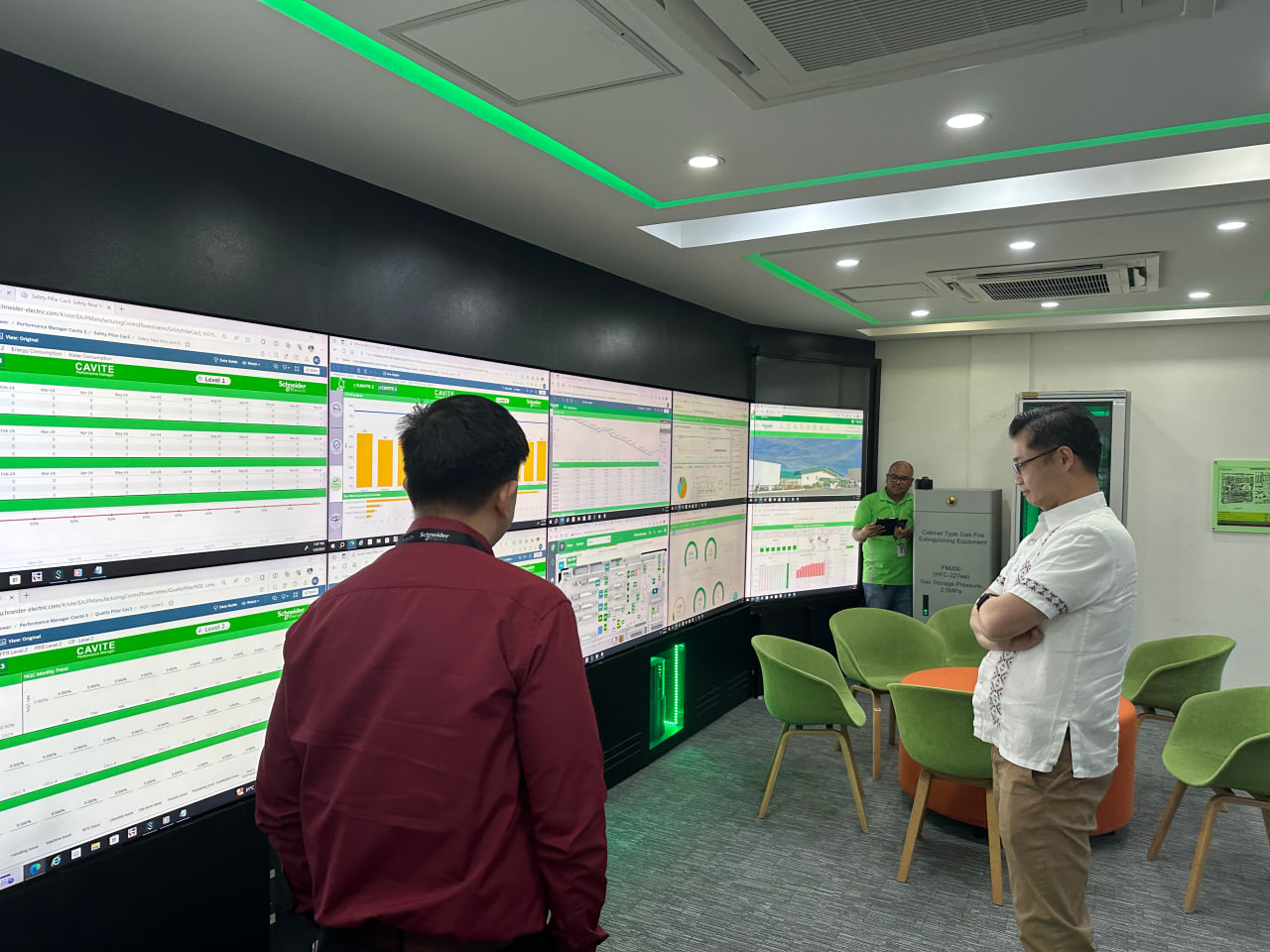
Schneider Electric Cavite Smart Factory: First Luzon Government Ecozone Site on 100% Renewable Energy

CAVITE, PHILIPPINES – Schneider Electric, a global energy technology leader, recently switched its Smart Factory in Rosario, Cavite to 100% renewable energy, setting a new benchmark for industrial sustainability in the Philippines.
The Cavite Smart Factory is the first manufacturing site within a government-operated economic zone in Luzon to fully transition to renewable energy, and the first Schneider Electric factory in East Asia to operate entirely on clean power. The switch, completed on December 26, 2025, capped Schneider Electric’s 30th year in the Philippines and was formally marked during the company’s 190th global foundation year on January 14, 2026. 

The milestone was achieved through collaboration with partners including the Philippine Economic Zone Authority (PEZA), Cavite Economic Zone (CEZ), Meralco Ecozone Power (MEP), Independent Electricity Market Operator of the Philippines (IEMOP), and ACEN Renewable Energy Solutions (ACEN RES), underscoring the role of cross-sector partnerships in accelerating the country’s energy transition.
“By moving our Cavite Smart Factory to 100% renewable energy, we are demonstrating that sustainability and industrial competitiveness can go hand in hand,” said Antonio Cheng, Jr., Cavite Cluster Plant Director. “This facility shows what can be achieved when innovation and collaboration come together and we hope it serves as a model for more Philippine manufacturers to follow.”
The transition to 100% renewable energy was made possible through the Green Energy Option Program (GEOP), which allows eligible customers to choose renewable power suppliers. With the program relying on multiple stakeholders, ACEN, PEZA, CEZ, and MEP emphasized that partnerships between companies and institutions are critical to accelerating the country’s energy transition. “We commend Schneider Electric for collaborating with partners and embracing innovations that align with our shared vision of a more sustainable and inclusive energy future,” said Arjon Valencia, Corporate Planning and Communications Manager of IEMOP, the central registration body for the GEOP.

The move is also part of Schneider Electric’s broader effort to decarbonize its operations and value chain in line with its net-zero targets. Since 2018, the company has helped customers save and avoid 729 million tonnes of CO₂, reduced emissions across its top 1,000 suppliers by 53% since 2020, and expanded access to green electricity to more than 60 million people since 2009. Over the same period, Schneider Electric has trained more than 1 million people in energy management, underpinning the company’s long-running sustainability program and contribution to its repeated global recognitions–including from TIME Magazine and Statista, and from Corporate Knights, as the World’s Most Sustainable Company, in 2025.
With over 1,300 employees, the Cavite Smart Factory now serves as a strategic hub within Schneider Electric’s East Asia supply chain network. Established in 1996 and integrated into Schneider Electric in 2007 through the acquisition of American Power Conversion (APC), the site supports global markets across North America, Europe, Asia, the Middle East, and Africa through the production of secure power and industrial automation solutions.
“We will continue to provide solutions that help industries reduce carbon emissions while maintaining efficiency and resilience in the way we operate,” shared Antonio Cheng, Jr., Cavite Cluster Plant Director of Schneider Electric Philippines
The Cavite Smart Factory’s switch positions Schneider Electric as a leader in clean energy adoption, showing how innovation turns sustainability commitments into real-world impact.

Thursday, November 6, 2025

Philippine Companies Double Down on Sustainability to Drive Growth Amid Economic Uncertainty: Schneider Electric

MANILA, PHILIPPINES – Schneider Electric, a global energy technology leader, today announced the results of its annual Green Impact Gap survey revealing that Philippine business leaders increasingly view sustainability as a driver of growth and competitiveness, even as they cite economic uncertainty and geopolitical instability as barriers to further sustainability investment.  
Ninety seven percent of companies have established sustainability targets. Among them, 58% report that sustainability reporting has become easier over the past year, largely due to technology advancements. Yet, 32% still face challenges, citing factors such as rising costs. 
This year, 55% of company leaders identify innovation and competitiveness as key drivers of sustainability, with the strongest emphasis from the semiconductors (71%) and data centers (60%) sectors, followed by real estate (53%) and healthcare (52%). This underscores how industries increasingly link sustainability with business innovation.
Sustainability is also delivering tangible business value. This year, 52% of leaders say it creates new business opportunities, up from 42% in 2024. Similarly, 42% pursue sustainability to strengthen brand and reputation, compared with 32% last year, while 46% cite cost savings and financial benefits, up from 43%. These year-on-year gains demonstrate that sustainability has evolved from a peripheral initiative into a core strategy for competitiveness and resilience.


Misalignment between declared goals and tangible action persists
While findings underscore the growing commitment to sustainability in the Philippines, they also reveal a persistent ‘Green Impact Gap’ — the misalignment between companies' declared sustainability goals and the tangible actions taken to achieve them. This year, 97% of companies set targets, but less than half are taking comprehensive action, keeping the regional Green Impact Gap at 46%.
With 2025 marking a critical milestone on the path to 2030 climate goals, companies remain optimistic. Around 84% express confidence in meeting or exceeding their 2030 targets, while 20% report being more than three years ahead of schedule.
“Companies across the Philippines are not just weathering the storm—they’re using sustainability as a compass to navigate it,” said Ireen Catane, Country President, Schneider Electric Philippines. “Despite volatile economic conditions, early movers and adopters are turning to digitalization and AI to drive efficiency, mitigate risk, and create lasting value.”
In parallel, two-thirds of companies (66%) report being very or moderately familiar with Republic Act 11285, the Philippines' Energy Efficiency and Conservation Act. Among these, 85% express moderate to high confidence in meeting its requirements, signaling readiness to implement concrete energy-efficiency measures. This trend aligns with the DOE's national efforts to promote energy efficiency, supporting businesses and local governments in optimizing energy use while advancing sustainability goals.
AI unlocks cost savings and energy efficiency
Artificial Intelligence (AI) is helping companies address financial and energy risks. 92% of companies in the Philippines this year are already applying or interested to apply AI to advance their sustainability ambitions. At 59%, AI for energy consumption optimization now tops the list of energy and resource efficiency applications, rising ahead of waste management (50%) and smart building management and automation (49%).
Companies see AI’s biggest impact on sustainability in automating data collection and reporting (51%), optimizing energy use (44%), and enhancing product design (44%). By improving energy efficiency, AI helps mitigate cost risks, aligning with the 46% of company leaders who cite financial benefits and savings as key drivers for sustainability amid persistent energy price concerns.
With the rise of energy demand in the Philippines, which the Department of Energy (DOE) projects will grow 4–5% annually and potentially double total power consumption by 2040 under the Philippine Energy Plan, companies continued to adjust their decarbonization strategies in 2025. The most widely adopted measures were switching to low-carbon or electric vehicles for transport (27%, up from 25%), and investing in research and development to drive innovation in low carbon technologies (27%, up from 25%). 
From 2024 to 2025, companies advanced in cutting Scope 2 emissions—indirect emissions from purchased energy such as electricity, steam, heating, and cooling—through onsite renewables (34%, up from 29%) and energy-efficient equipment (41%, unchanged). They also adopted emerging measures like Green IT plans (31%). Efforts to reduce Scope 3, or value chain, emissions also grew, with gains in supply chain optimization (33%, up from 29%) and in promoting remote work and video conferencing to cut commuting and travel-related emissions (31%, up from 30%).
Investments hold steady despite economic uncertainty
With business leaders seeing the bottom-line benefit of sustainability, planned investment in sustainability transformation has held steady with 23% of companies planning to invest at least $US1 million over the next two years. 
While investment in sustainability continues to face key limiters, most have eased slightly year-on-year. Economic uncertainty remains the top concern but dropped from 49% in 2024 to 45% in 2025. Internal budgetary constraints show a sharper decline, from 48% to 37%, while regulatory and policy difficulties (37% to 35%) and poor incentives (36% to 35%) also decreased marginally. These shifts suggest that while structural and financial challenges remain, the investment landscape in 2025 has become relatively more favorable for corporate sustainability compared to the previous year.
Now in its third year, the Schneider Electric Green Impact Gap survey, conducted with Milieu Insight, gathers insights from 4,500 middle- to senior-level executives across nine Asian markets—Indonesia, Japan, South Korea, Malaysia, the Philippines, Singapore, Taiwan, Thailand, and Vietnam—on how businesses are prioritizing and investing in sustainability through a 30-question assessment.

Tuesday, July 15, 2025

Schneider Electric named the World’s Most Sustainable Company by TIME Magazine and Statista

PARIS – June 25, 2025 – Schneider Electric, the leader in the digital transformation of energy management and automation, has been named the “World’s Most Sustainable Company 2025” by TIME Magazine and Statista. This is Schneider Electric’s second consecutive year atop the list, which ranks 500 of the World’s Most Sustainable Companies.

This recognition reflects Schneider Electric’s consistent progress toward its own sustainability goals, as well as its commitment to helping its customers become more energy efficient and reduce their emissions. The company continues to show transparent progress against its ambitious sustainability goals, which include a 25% absolute carbon reduction across its entire value chain by 2030 and Net- Zero CO2 emissions across the entire value chain by 2050. The company’s SBTi-validated Schneider Sustainability Impact 2021-2025 (SSI) program acts as its roadmap, enabling sustainable progress, not just for Schneider Electric and its partners, but also for its customers and local communities.

“We’re incredibly honored to be recognized as the world’s most sustainable company for the second year in a row,” said Olivier Blum, CEO of Schneider Electric. “As a technology company, our goal is to be the trusted partner of our customer to deliver efficiency and sustainability. At Schneider, sustainability is at the heart of everything we do. We strive to be an Impact Company—where performance is the foundation. Our purpose drives us to engage our entire ecosystem, our mission positions us as part of the solution, and our culture sets us apart. This holistic approach ensures that every aspect of our operations and value chain contributes to a more sustainable world.”

The ranking evaluates a pool of 5,700 companies across 20 key performance indicators, ultimately naming 500 of the World’s Most Sustainable Companies. It assesses factors such as Scope 1 and 2 emissions and energy consumption relative to company size, emissions reductions, and the proportion of renewable energy used in operations. It also considers external factors, including sustainability ratings and commitments, corporate reporting practices, and environmental and social performance indicators.

Schneider Electric has also been named the World’s Most Sustainable Corporation 2025 by Corporate Knights and is the only company to rank first in its Global 100 twice. The French company has also been named Most Sustainable Corporation in Europe and in France by Corporate Knights.

Friday, April 5, 2024

Schneider Electric Reveals 99% of Filipino Companies have Established Sustainability Goals, Recommends Digitalization for Profitability and to Cut Carbon Emissions

Schneider Electric Reveals 99% of Filipino Companies have Established Sustainability Goals, Recommends Digitalization for Profitability and to Cut Carbon Emissions

MANILA, PHILIPPINES – Schneider Electric, a global leader in energy management and digital automation, unveils findings from its annual Sustainability Survey, which was conducted with the global research firm, Millieu Insight.

Results show that 60% of APAC’s business leaders feel that their company and country view sustainability as a ‘high priority’. In terms of the industry’s perception on digital transformation, 94% of business leaders agree that electrification is key to their corporate sustainability strategy. In the Philippines, 99% of our local business leaders have established goals to achieve Net Zero in their operations.

The survey engaged 4,500 C-level to Middle-level business leaders across nine countries in Southeast and East Asia, including the Philippines. The objective is to gauge sentiments and actions on sustainability within APAC and the local business community.

“We are seeing a growing trajectory towards greater sustainability integration into our local industries’ operations. As a leader in sustainable energy management solutions, Schneider Electric is reaffirming its commitment to support the business industry and the government in their pursuit towards their shift to green energy,” said Ireen Catane, Country President of Schneider Electric Philippines.

Intention vs. Action: The Green Action Gap

The Green Action Gap, a Schneider Electric identified metric used to estimate the rift between the organizations' declared commitment towards their sustainability goals and the tangible actions to implement sustainable development by companies. It reveals that while 99% of the surveyed leaders have established sustainability plans, only 58% have set their plans in action. The reasons captured include: poor incentives, regulations uncertainty, bureaucratic challenges, market data references insufficiencies and lack of business priority. While challenges persist, this gap serves as a rallying call for urgent efforts to bridge intentions with actions.

Across the region, the top reasons reported for pursuing corporate sustainability were innovation and competitiveness (39%) and an increase in business opportunities (37%) with countries in Southeast Asia most likely to agree that sustainability contributes to business growth. Risk management, reputation and opportunity for cost saving round out the top five motivating factors companies consider when making decisions around sustainability strategy.

Most business leaders across the region (82% on average) believe that providing more incentives is more effective than enforcing penalties to encourage private sector compliance with government sustainability goals.

“We are encouraged by the growing awareness and commitment among Asia's companies to establish sustainability goals. However, the survey's findings on the intention-action gap reveal that there is still work to be done. As we navigate the urgent need for sustainability, it becomes more crucial for businesses and the public sector to collaborate and leverage innovative solutions to create a more sustainable future,” Catane emphasized.

Schneider Electric

Electricity 4.0: Path to Net Zero

To be on track for a net zero world in 2050, businesses need to reduce emissions by 50% this decade. At the recently concluded Philenergy Expo 2024, Schneider Electric introduced its global vision, Electricity 4.0, which shows how digitalization is the key to mitigate climate and energy crises.

From the survey report, results show that 97% of Philippine companies agree/strongly agree that digitalization is a key sustainability driver. The same number also consider energy efficiency as a core aspect of their sustainability plan.

“Electricity is the cleanest and most visible form of energy. By building a smart electric world where everything is interconnected, people will have the ability to optimize safety, reliability, performance, and lifespan. All while working towards achieving our global carbon neutrality goal by 2050,” says Catane.

Schneider Electric offers a range of cutting-edge integrated solutions tailored to help businesses in the Philippines digitize, decarbonize, and strategize.

The company’s proprietary EcoStruxure solution, combines hardware and software to connect an enterprise, from the shop floor to the top. This enables users to track and make iterations on their operations real-time allowing for optimized operations and reduced energy consumption.

“With digitization, energy shifts from being the biggest driver of carbon emissions to the biggest opportunity for carbon reduction. We have the tools that we need to drive change. All we need to do is to work together to make that happen,” Catane added.

Friday, February 16, 2024

Schneider Electric urges PH Data Centers to Implement Smart and Sustainable Solutions to Minimize Energy Consumption

Schneider Electric urges PH Data Centers to Implement Smart and sustainable solutions to Minimize Energy Consumption
Schneider Electric recently gathered leaders in the data center industry for a roundtable discussion on how data centers can accelerate energy transition and a golf match at Manila South Woods Golf and Country Club, Cavite.

Manila, Philippines – Schneider Electric, the leader in energy management and digital automation, underscores the importance of a green approach to data center design and operations to future-proof operations and lessen carbon emissions. This will make the industry more sustainable and resilient to growing demands. 

The company recently gathered data center industry players to discuss today’s data landscape and challenges in an event called Power Up: Fuel Your Path For Success. 


Uptime Institute, an international research organization on global data centers, estimated a 500% growth in data generated from 2019-2025 all over the world. As its operations are energy-intensive, the data center industry is estimated to account for 1% of global electricity consumption. 


"Data centers have become integral to our rapidly growing internet economy. The need to transition to sustainable operations has become more pronounced," said Carlos Leviste, Business Development and Marketing Director at Schneider Electric Philippines. He added that industries have previously leaned heavily on fuel alone to run their operations. As data center facilities are energy-intensive, data centers play a pivotal role in sustainability. The most efficient way would be to shift to electricity and digital. 


However, there is a growing preference across industries for maximizing energy management systems and digital tools, which not only drive operational efficiency but also promote sustainability. Data centers, equipped with smarter operations, can optimize costs, speed, and capital to prepare them for future technological integrations and risk mitigation.


Schneider Electric is at the forefront of this advancement with its extensive suite of digital solutions to improve the efficiency and sustainability of data centers. For instance, APC, Schneider Electric’s flagship brand, offer high-efficiency uninterruptible power supplies (UPS), cooling units, and monitoring systems to foresee any unwanted downtime within the data centers and pinpoint inefficiencies to their operations. 


In particular, the oil-free cooling centrifugal compressors with magnetic bearings chiller systems that Schneider Electric utilizes allows data centers to consume power more efficiently and sustainably.


Similarly, Schneider Electric provides renewable Power & Grid solutions that can help produce electricity sustainably to fuel data center facilities’ increasing needs. 


“Through these solutions, data center facilities can reduce operational costs in design and engineering, function using grid-compliant assets and software with reduced cybersecurity risks and ensure proactive maintenance of assets to maintain optimum uninterrupted performance,” said Sara El Fanidi, Power and Grid Sales Leader of Schneider Electric APAC. 


Furthering its commitment to sustainable digital transformation, Schneider Electric has also introduced new industry certifications within its EcoXpert™ Partner Program. These certifications are aimed at empowering partners to become trusted advisors on Data Center and Critical Infrastructure solutions, ensuring data centers are not only efficient and resilient but also sustainable. 


By harnessing the power of digital transformation and connected infrastructure, Schneider Electric is setting a new standard for data centers — one that prioritizes sustainability, reliability, efficiency, and resilience in the face of rapidly changing demands.

Wednesday, January 24, 2024

World Economic Forum recognizes Schneider Electric as a Circularity Lighthouse

January 24, 2024 Schneider Electric, the leader in the digital transformation of energy management and automation, today announced that it has been recognized by the World Economic Forum and McKinsey as one of three global Circularity Lighthouses in the built environment.

This new designation recognizes pioneering circularity solutions that demonstrate innovation, substantial impact and value, and maturity of scale. The new lighthouses were selected by an independent panel of experts from industry, academia, and public life.


The World Economic Forum defines the built environment as residential and commercial infrastructure. Together, this is responsible for 39% of energy-related CO2 emissions, 33% of material consumption and waste generation, and 25% of land system change. The Forum’s Circular Lighthouse network provides companies a way to share and learn from one another to rapidly accelerate action and scale for greater resource efficiency.


Schneider Electric was recognized by the World Economic Forum and McKinsey for its end-to-end circular approach across a broad portfolio of its energy and building automation solutions. Through eco- design, waste-to-resources sites, and a global network of refurbishment centers, Schneider Electric has avoided approximately 513 million tons of CO2 to customers since 2017.


The company also uses 27% green materials across its products with the ambition to reach 50% by 2025. 22% of Schneider Electric’s product families have a circularity option, and more than half of Schneider Electric’s manufacturing sites recover more than 99% of waste.


“Circular business models offer compelling sustainability and commercial benefits,” said Peter Herweck, Schneider Electric’s Chief Executive Officer. “We look forward to the opportunities this new Circularity Lighthouse network offers to learn, share, and accelerate action.”


One example is how Schneider Electric gives its MasterPact MTZ circuit breakers a second life. Refurbished at the MasterTech plant in France, these circuit breakers are collected from customers at the end of life, disassembled, diagnosed, upgraded and tested before being put back on the market.


At the recent World Economic Forum’s annual meeting in Davos, Switzerland, Herweck also urged that greater deployment of existing technologies is needed to keep climate change from spiraling out of control. 


“With energy accounting for 80% of carbon emissions, the energy transition is central to decarbonization. The potential of AI is currently capturing everyone's attention. But let’s not forget that existing technologies – both renewable energy generation and digital and electrification tools that lower energy demand by rendering sites and operations far more energy efficient – can sharply reduce emissions now. There’s no time to wait for tomorrow’s solutions when much more can be achieved with what we have today,” he added.


IMPACT Supply Chain Program


Circular business models and supply chain design are part of Schneider Electric’s IMPACT Supply Chain program. This is the next evolution of the company’s supply chain transformation, which aims to make a positive impact on both customers and planet. Its key pillars are:


  • People – Schneider’s people are empowered to innovate and make a positive impact for customers every day.

  • Planet – Schneider Electric is building a sustainable, responsible, and net-zero ready supply chain.

  • Customers – Schneider Electric’s reliable supply chain delivers industry-leading quality.

  • Performance – Schneider Electric drives performance through advanced technology, smart and unified processes, regional ecosystems, and collaborative design.

Wednesday, January 10, 2024

Schneider Electric Strengthens Government Partnership to Drive Digital Transformation in the PH Manufacturing Sector

Schneider Electric hosted a tour in its Cavite Smart Factory to demonstrate its smart manufacturing solutions to its partners from the public sector and other stakeholders. (L-R): Yellapa Thimmanna, Business Finance Senior GM of APC, Schneider Electric's flagship brand,  Ejie Tauto-an, Logistics Director of APC, Sen. Sherwin Gatchalian, Chairman of the Committee on Ways and Means, Ricardo Domingo Jr., Digital Transformations Leader of Schneider Electric Philippines, and Atty. Norman Roland Ocana III, Head of Government Affairs of Schneider Electric Philippines

MANILA, January 10, 2024 - Schneider Electric, the leader in energy management and digital automation, reaffirms its commitment this 2024 to help accelerate digital transformation in the local manufacturing sector.

Schneider Electric recently hosted Senator Sherwin “Win” Gatchalian, chairman of the Committee on Ways and Means, in its Cavite Smart Factory. Senator Win Gatchalian was given a tour of the company’s state-of-the art facility that is leading the way in smart manufacturing in the Philippines. 


The factory showcases its innovative end-to-end manufacturing solutions that also leverages its own Ecostruxure™ technology. The company’s proprietary technology focuses on leveraging the Internet of Things (IoT) where organizations can integrate various assets, sensors and other things into an open IoT architecture and software platform. Through this, businesses can achieve better agility, optimized asset performance management, energy efficiency and cybersecurity. Schneider Electric Smart Factories are recognized by the World Economic Forum for paving the way in transforming global manufacturing operations to becoming more efficient and productive through sustainable means. 


Sen. Sherwin Gatchalian explored Schneider Electric’s Smart Factory in Cavite to look into potential digital solutions that can drive sustainability for the manufacturing sector in the Philippines. 


“At Schneider Electric, we remain committed to bringing global solutions to support local industries and manufacturers. Our focus this year is to strengthen our partnerships and harness the power of digitalization and efficiency to build a more sustainable tomorrow for all,” shares Atty. Norman Roland Ocana III, Head of Government Affairs of Schneider Electric Philippines.


Additionally, Schneider Electric is strengthening its collaboration with PEZA to help deliver smart and sustainable solutions to the business sector. This will help place the country at the forefront of industrial digitization and innovation. Last November 2023, Schneider Electric and PEZA launched Go Ecozone, a series of forums that aims to educate PEZA-registered locators on the advantages of green economy. Likewise, it also provides an avenue for the manufacturing sector to share insights and seek support from PEZA on their transformation goals. 


“We will continue to collaborate with the government to deliver cutting-edge, sustainable solutions to power up industries and help boost the economy,” Ocana adds.